Image Map
Showing posts with label music. Show all posts

Sunday, July 5, 2015

1,000 TpT followers Giveaway

1000TpT-giveaway

Wow! I cannot even believe I'm writing this right now. Just a year ago I was celebrating 400 followers and now I have OVER 1,000 followers. What a humbling experience. I'm so grateful for each and every one of you that has followed me, so I'm throwing a BIG HUGE giveaway!

SIX FABULOUS prizes up for grabs:
  1. $25 TPT Gift Card to be spent on anything site wide
  2. $15 credit to my TPT store
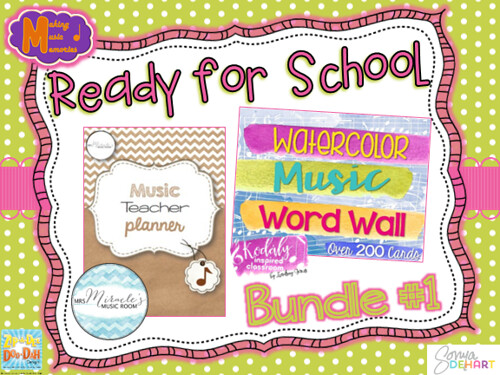
  3. Ready for School Bundle: Watercolor Music Word Wall (donated by Lindsay Jervis @ Lindsay's Kodaly Inspired Classroom) and Music Teacher Binder (donated by Aileen Miracle @ Mrs. Miracle's Music Room) (approximately worth $17.50)
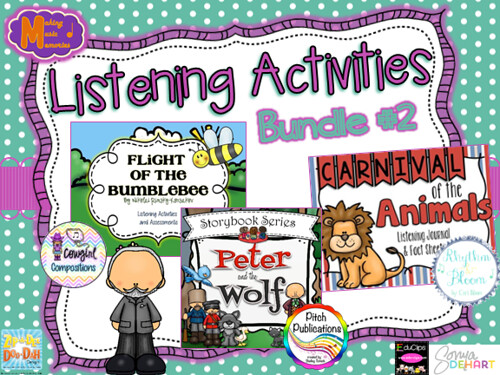
  4. Listening Activities Bundle: Carnival of the Animals - Listening Journal & Fact Sheet (donated by Cori Bloom @ Rhythm & Bloom), Peter and the Wolf - Storybook Powerpoint (donated by Shelly Tomich @ Pitch Publications), and Flight of the Bumblebee - Listening Activities & Assessments (Katie Robertson @ Cowgirl Compositions) (approximately worth $14)
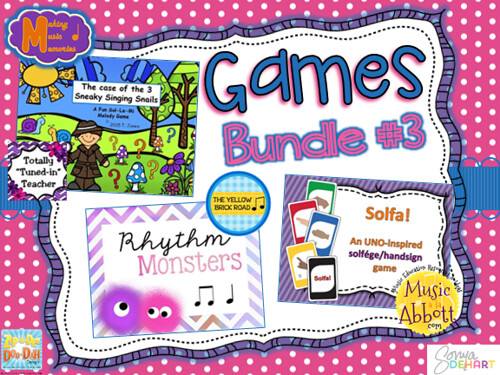
  5. Music Games Bundle: Rhythm Monsters (Jennifer Hibbard @ The Yellow Brick Road), Solfa! An Uno-Inspired Game (donated by Amy Abbott @ Music a la Abbott) and The Case of the Sneaky Singing Snails - So, La, & Mi edition (donated by Tina Jones @ Totally Tuned-In Teacher) (approximately worth $12.50)
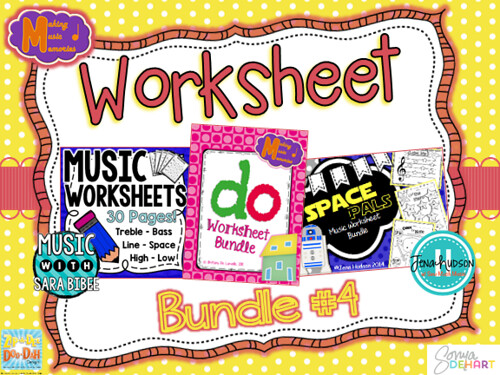
  6. Music Worksheet Bundle: Space Pals - Music Worksheet Bundle (donated by Jena Hudson @ Sew Much Music), Music Worksheets (donated by Sara Bibee @ Music with Sara Bibee), and Do Worksheet Bundle (donated by me) (approximately worth $12.50)
Here is a preview of what you could win:
1000TpT-bundle
1000TpT-bundle2
1000TpT-bundle3
1000TpT-bundle4


Good luck!
Sunday, March 15, 2015

Preparing High & Low

I'd love to share some of my new (and old) activities for working on high and low with my students. This has been an extremely difficult concept for my Kindergarteners to understand, but this year I had every Kindergartener receive 100% on our assessment of opposites. (Which includes one question for loud/soft, one question for high/low, one question for fast/slow, and one question for long/short)

This year I got some fresh new ideas from many colleagues on the Facebook General Music Group. It is so great to collaborate with so many other music teachers and bounce off ideas. It was from this conversation that I received some ideas of new ways to teach this concept.

Vocal Explorations
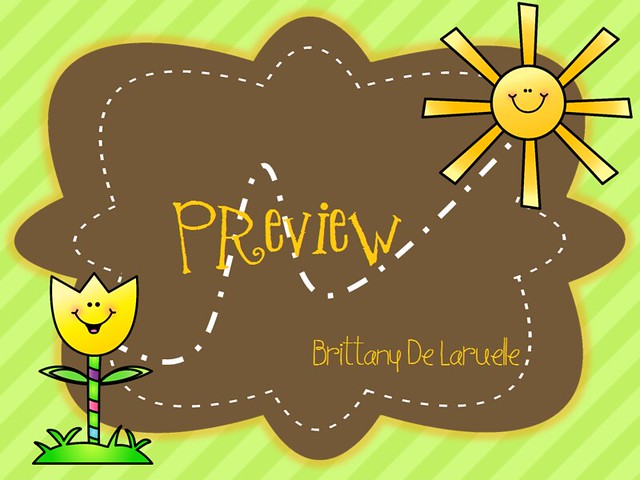
Before I even talk about high and low, I work a lot with students on singing in their high and low voices. This includes having students match the pitch of a slide whistle I play for them. Saying phrases like 'mmm' going up and down with their voice. Plus, we do a lot of vocal explorations on the SMARTboard. The vocal explorations are my favorite to create and use in my classroom. If you aren't familiar with vocal explorations they are pictures with hills and lines showing the way students should sing. Students follow the image using their voice. They sing in their high voice when the line is toward the top of the picture and use their low voice when it is at the bottom. We normally have to practice a couple times before we really start to get good at it. One of the most common mistakes I get is when students just repeat the first image over and over again. I then remind them to look at the way the line is different and work on singing what it shows. Another common mistake is that students always want to end in their high voice. It helps when I point out before we start: Are we starting in our high or low voice? Are we ending in our high or low voice? Then I correct if students don't sing it correctly.

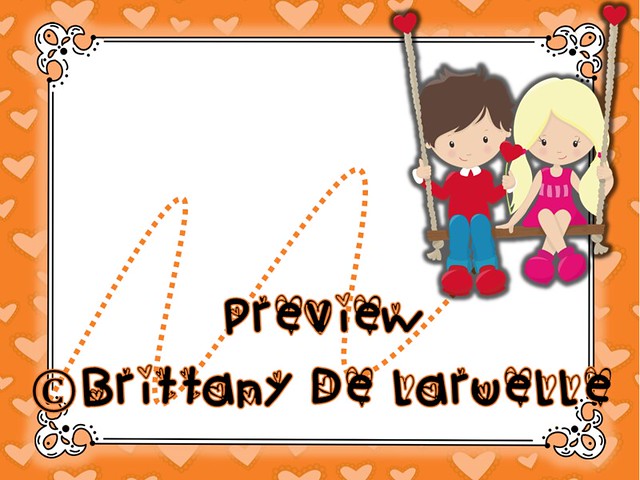
Here are some images of what vocal explorations look like:
ValentineVocalExploration1
ValentineVocalExploration2 Slide2 Slide6 SpringVE2

Note that some have lines and others are empty so your students can draw their own on your interactive white boards.

You can find a wide variety of these in my Teachers Pay Teachers Store:
Vocal Explorations
-OR-
You could create your own using Powerpoint.

If you aren't sure how to create your own Vocal Explorations and would like to learn more about how to do this please leave a comment on my facebook page or in the comments to let me know. I'd be happy to blog about how you can create your own (if there is enough interest).

Tuesday, October 8, 2013

2/4 Tuesday - More Music Books I Love


As I mentioned in previous posts (There Was an Old Woman Who Swallowed Some Leaves, Iza Trapani Books, & Get Ready to Romp) I love using books in my classroom.

Here are a few more I love:
  1. Freddie the Frog Series: I cannot believe I haven't talked about these already. They are remarkable. They tell the story of Freddie and his friend Eli the Elephant. There are 5 stories in all and they all help teach young children (ages 3-9) different music concepts. This includes tempo, treble clef notes, bass clef notes, and jazz. There is also a great site you can go to and reinforce the concepts used in the books. (Click on the picture to go to the Freddie the Frog Site)


  2. Puff the Magic Dragon: This book is the classic song, but has such beautiful illustrations! I love this song and I'm sure a lot of you do, too. My students love this song and ask for it all the time! (Click the picture for Amazon buying details)
On a completely new topic, I have continued to update the look of my blog! What do you think? I still have some things I want to continue to edit and I may still even change some of the pieces I updated, but I think it is really starting to look personalized. My goal is to make it look really nice as an inspiration to keep up with this blog. Make sure to check out the CONNECT TO ME links on the right to connect you with all the social media I'm apart of. (Including my new facebook page!) Also, if you have a music education blog button feel free to send it my way and I will add it.

Thursday, October 3, 2013

Why do we HAVE to learn music?

"Why do we HAVE to learn music?"


That was the question posed by one of my students, yesterday. I will admit to getting rather choked up, frustrated, and annoyed at this question. Not because I don't have a valid reason for teaching music, or because I don't think students HAVE to learn music, but because it frustrates me sometimes that this question has to be asked. However, upon some reflection, I have asked this question about other subjects I HAD to learn in school. I never asked my teachers, but I did complain about these subjects at home. Like geometry, biology, geology... none of them seemed to matter.

So, why do elementary students HAVE to learn music. Many of you reading my blog already know the answer, but how do you explain its significance to a child who dislikes the subject? Are you going to actually convince them that it is important and that it does have benefits? I don't know, but I think it is our job to try. So, here is what I have come up with as an answer to this rather broad question:

MUSIC is the link between all subject areas:


MUSIC is about self-expression, creativity, and innovation. It teaches us about beauty.

MUSIC exercises the WHOLE BRAIN and allows children to do multiple things at a time.

MUSIC connects us to the world, reminds us of our history, helps us to communicate with others.

MUSIC expresses ideas and emotions that cannot be expressed any other way.

In conclusion, there is no question that MUSIC needs to be taught and everyone should HAVE to learn it. However, like many other things that are good for us, it does not mean we will always like them. I LOVE MUSIC and always have, but there are other things that are good for me that I don't enjoy like exercise, lima beans, and science, but it doesn't mean I don't HAVE to do them or HAVE to learn about them. It just means I don't enjoy them as much as I enjoy other things.

What are your thoughts? How would you explain the importance of music to a young child?

For more links to great articles about Music Advocacy check out my school website by clicking HERE.

Monday, September 23, 2013

Manipulative Monday - Music Time Signature Pies


Yay! Not only two blog posts in a row, but I'm also joining my first Link Party! Music teachers are so cool! :)

Honestly, I wish I used more manipulatives in my classroom. I'm hoping reading all these posts will inspire me to actually go for it and do it. I also have to do a better job of looking out for some of those cool finds like the erasers I saw in Lindsay's blog.

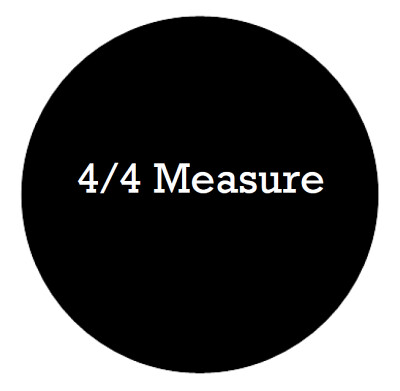
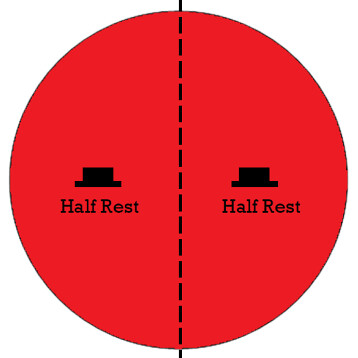
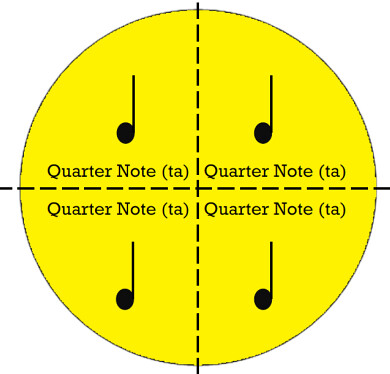
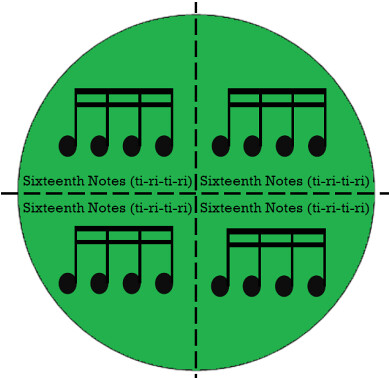
Instead, one manipulative I have used for time signatures are these music pies I created. Each pie represents a measure in 4/4 time. The black one is the filler for students to create their own measures:
meter

Then, I have several colored pies for the different notes my students know. I cut each one along the dotted lines so that the pieces only fill up the amount of the measure they take up. Here are a few examples of my music note/rest pies:
halfrest

quarternote

sixteenthnotes

This allows my students to create their own measures and see how they fit into the measure. This is great for kids that really need a visual or are more kinesthetic in nature. When working on a short composition students can check their work by putting the pieces together. If there are too many beats they know they have to fix something. If they have extra space in their measure they know they need to add another note.

For those that are interested they were added to my Teachers Pay Teachers Store and are completely FREE! Just print them, cut them, laminate them and you are ready to go! Please let me know if you use them and how they worked for you.

signature

Sunday, January 27, 2013

Safe Share Instrumental Videos

As I stated in an earlier post, I am currently working on teaching different instruments of the orchestra and various ensembles. In my experience, any time I can share a cool video with my kiddos they get SO much more excited about what we are working on. This is especially important to me because if the kids don't have fun learning about it they tend to not actually listen -or- learn. Plus, I find that some students will enjoy the work no matter what, but others need a little inspiration to make them excited about the subject.

My trick is to use videos of popular artists on YouTube or new and interesting videos that relate to the topic. On my professional website I list all sorts of links to these videos for my students to watch at home, at their convenience. I also show various videos in class when they relate. This gives me the opportunity to show or remind the students of these videos and spark their curiosity. My philosophy is to get kids excited about music and have them involved in music even outside of music class. If that means watching an orchestra play a Katy Perry song or Bruno Mars song, I feel I'm still building their music pallet. This is not something they would probably search out themselves, but they are still excited about it!

As I stated before, I have MANY videos on my school website, but I'm going to share just a few that I have used for this instrument families unit:

The Vegetable Orchestra - People creating instruments using vegetables. Great way to introduce the orchestra or just talk about non-traditional instruments.


Cello Wars by The Piano Guys - This is a piece by The Piano Guys. You seriously have to check them out and see more of their videos. I also shared their One Direction video with my 1st graders who are studying vibrations, and their Mission Impossible video with some of my classes. They are just a fun group and I'm sure your students would like any of their videos.


Crystallize by Lindsey Stirling - Another great strings player. She has some WONDERFUL videos and it is a great way to get students into some classical music. It is hard not to get pulled into her videos.


Lady Gaga played by Breaking Winds - This is a group of four bassoon players. I liked it because bassoon is an instrument students do not normally know that much about and may not have ever heard.


Somebody That I Used to Know perfomed by Pentatonix - If you do not already know about this group, you are missing out. They have such GORGEOUS arrangements of different pop/rock songs. The best part is they sing all a cappella, but the students have such a hard time believing it. Show them any video and your kiddos will be hooked. I have a 2nd grader who is begging his parents to go to one of their concerts this year and other students that tell me how they watched EVERY one of their videos.


Firework performed by Salt Lake Pops Orchestra - This group creates beautiful arrangements of pop songs for their orchestra. Wonderful videos, too!


Now, I know this is getting a little long winded, but I feel it is important I quickly talk about Safe Share. Safeshare.tv is a website that makes sharing YouTube videos with your students safer. You know how pesky those ads are and even the videos they may recommend you aren't always appropriate for your little ones eyes. So, you take the link, paste it into SafeShare and voila you have a safe video. Same video, no ads, no recommended videos, and no way to get to YouTube directly from the video. Much safer for sharing with your students. It is probably the best link I could possibly share with you. Hope you find it as useful as I have and please let me know if you share any of these videos! Or feel free to share YouTube videos you watch. I'm kind of a YouTube-a-holic.

Wednesday, October 31, 2012

Describing Music using Music Terminology

One of the things I'm really working on with my older students (3-5 grade) is describing music using musical terms. I explained to one of my principals that I feel this is an important skill that can really help students appreciate music in a whole new way. How cool is it when a student can pick out instruments in a pop song or describe differences in tempo. This is a skill that all kids can learn and use even if they never continue on in music.

I first emphasized this skill during our outdoor music classes (read more...).

When we went outside I had my students sing I Love the Mountains. Later, I had my students write a short reflection on the difference of sound singing outside verses inside. They were encouraged to use music words from the word wall.

Most of the reflections said things like:
  • The sound echos more inside than outside
  • We sang quieter outside rather than inside
  • There were other noises outside like leaves rustling and birds chirping
  • Our sound was much more blurred together outside

After this reflection I realized I really needed to show students HOW to use music terminology in their reflections without having to change what they are saying. In order to do this I came up with a reflection assignment students had to do for homework. (I rarely give homework, but this was a simple assignment and they were given 2 weeks to complete it)

First, I showed students some examples of reflections they wrote:
I Love the Mountains sounded different outside because it echoed less outside than inside. I also thought we sang a lot quieter outside. I also noticed that outside the music was much more blurred together where as inside it was much more disconnected.
Then, I showed them how they could just substitute a few words for music words and it still was saying the same thing.
I Love the Mountains sounded different outside because it echoed less outside than inside. I also thought we sang at a piano dynamic outside. I also noticed that outside the music was more slurred or legato rather than inside where it was much more staccato.
Finally, I gave them the assignment (this was partially an idea I was given by my school principal to also include some technology):
Students should write a short music reflection about a song that they have listened to during the month. This allows students the opportunity to listen to any song they enjoy and still be practicing writing and using music terminology. *NOTE:I even allowed non-school appropriate songs as long as they had permission from their parents. That way they could truly listen to whatever kind of music they like*

All responses were emailed to me unless they could not because of not having internet or computer access at home. I also printed out a few paper copies for these students, but they were responsible for picking them up from me.

I posted all information on my school website so students could access it at anytime. Along with this I posted: the questions they were to answer, links to music videos they may like to watch for the assignment, a word bank of musical terms to use in their reflection.

This assignment was due by Halloween and I do have to say it was such a fun experiment. I did have quite a few students that I was constantly hounding to turn in their assignment (what is new), but the responses were great! I also had quite a few students that were really excited about the assignment and enjoyed the videos I posted. It was also a great way to include technology and writing into my curriculum. (Two school goals for Fairview Elementary.)

You can see all the directions for the assignment, video links, and word bank all on my school website -->here<--. Feel free to steal the idea and even the word bank, just let me know how it works for you. :)

Happy Halloween! BOO!

Thursday, October 25, 2012

Get Ready to ROMP!

Shake, Shake Shudder
near the sludgy old swamp.
The dinosaurs are coming.
Get ready to romp!


The outdoor lesson for 2nd grade was using the story Dinosaurumpus!


As I have mentioned before, I like to use literature in my music classes. It reminds students of the connection between music and literature, but also there are so many great music stories I want to share with my students!

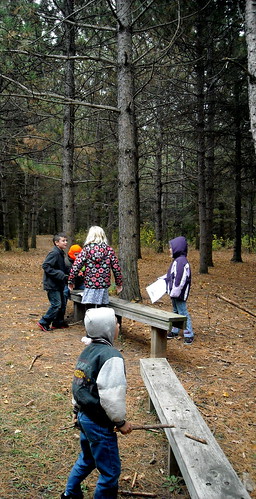
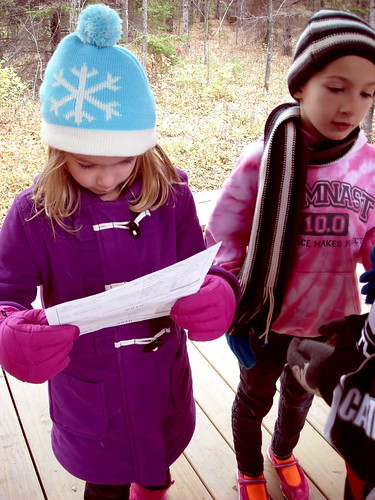
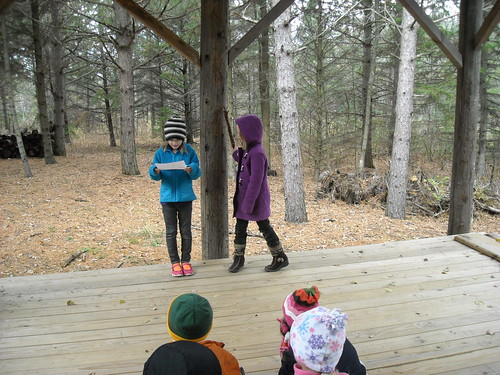
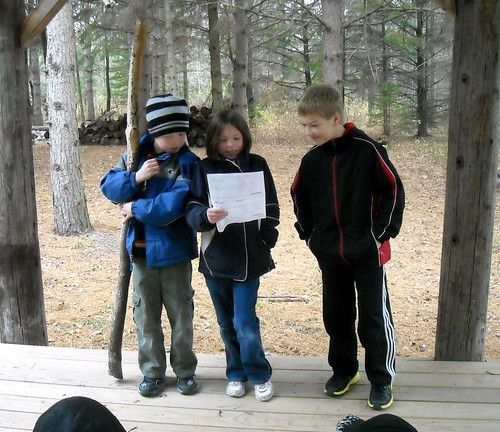
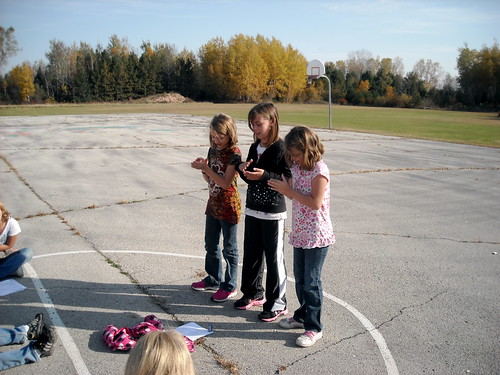
What I noticed about Dinosaurumpus! was that it had a lot of rhyming, but also had a nice steady beat. Along with this, it has tons of onomatopoeia words. This allowed for some fun sound effects. I broke the story into 6 parts and then gave each group of 3 students a part. They had to create sound effects for all the words I underlined. I told them that since Dinosaurs would roam around outside they had to create all their sound effects using their mouths, bodies, or items found in nature.
Sound Effects
DSCN2175


After a day of work they preformed their parts for the class.
DSCN2176
DSCN2178


Some groups were really creative with how they came up with sound effects :). Other groups, sounded as though they did the same sound effect for everything :/.
DSCN2186
DSCN2179

To stretch students creativity, in the future, I would change some of the directions for the project. First, I would make sure to state that they should use at least two sound effects with their voice, two sound effects with their body, and two sound effects using nature. I would also stress that the sound effects have to be different. Not just hit the stick on the ground, then hit it on a tree, then hit it on something else. Instead scraping the stick, breaking the stick, hitting the stick, etc.

Overall, I was very happy with this project, though. I love watching my students be creative and get the opportunity to explore music outside of the music classroom.

Tuesday, October 23, 2012

Outdoor Instruments

As I talked about in my previous post, all my classes at Fairview went outside last week for music class. We had many different activities outside and the students learned a lot!

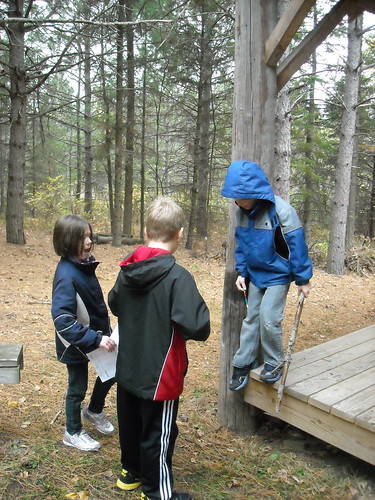
The Kindergarten and 1st graders were given a task of finding an object in nature that could be used as an instrument. After finding their make shift instruments the Kindergarten students got to share the instrument and play it for the class. I was impressed with the amount of creativity shown. A couple Kindergarteners used pinecones, leaves, sticks, rocks, or a combination of items.

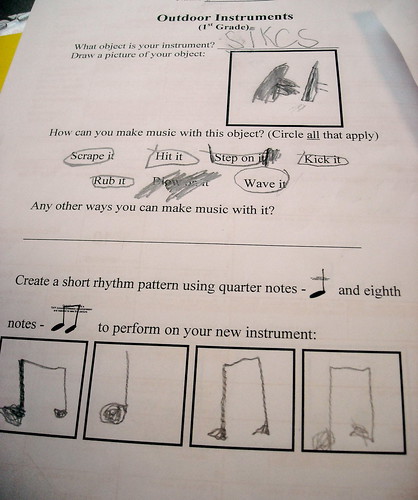
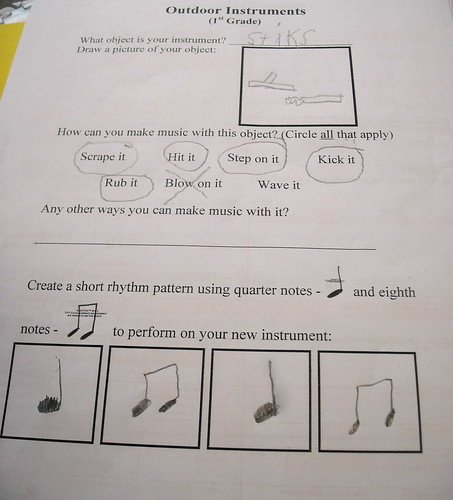
1st grade students filled out a short worksheet to go along with finding their object. This gave them a chance to continue practicing reading and writing skills, as well as, show me what they are learning.

The first part of the worksheet was telling me what their instrument was and drawing a picture of it. After that we figured out how the instrument could make music. I had several ways and each one students tried. As they tried them they would x out the ways that didn't work and circle the ways that did work. (We went one by one as a class so the ones that had more difficulty reading always knew the task.) My 1st graders loved trying to find out the ways their instrument made music. They enjoyed hitting, shaking, scratching, etc. their instrument to try to make noise. I really enjoyed watching them try all the different ways and was SO happy to see them only using their instruments as instruments and not as weapons. (We did talk about that before hand JUST in case.)

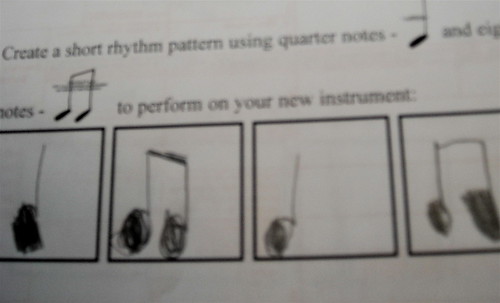
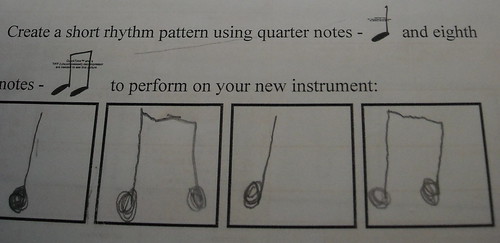
At the bottom of the worksheet 1st graders had to come up with a rhythm using quarter notes and eighth notes. I created four boxes and explained that they had to choose either a quarter note or a pair of eighth notes for each box. They could not put BOTH in any of the boxes. All the kids followed the directions! YAY! Finally, each 1st grader got to play their instrument for the class sharing both their rhythm and instrument. It was so much fun!

Here are some of the finished worksheets:
Worksheet Example #4
Worksheet Example #3
Worksheet Example #2
Worksheet Example #1

Interested in seeing the worksheet I created. Find it -->here!<---

To finish the day, I always like to share a songtale or story with my Kindergarten - 2nd grade classes. This is part of the routine of my classes and students have come to expect it and know that story time means the end of music class. To go with the theme of being outside in nature I sang the story There Was an Old Lady Who Swallowed Some Leaves.

The kids chuckled at the silliness of an old lady swallowing a pumpkin. They also liked guessing what the old lady sneezes out after swallowing all the things she does. What a great way to end the lesson!

Make some musical memories today!

Tuesday, October 16, 2012

Outdoor Music Class!

Sound Effects
Last week I decided to take all of my Fairview students outside for music classes. I decided to do this after having a short chat with a 2nd grader who often acts up in my class. He had kind of a rough day about two weeks ago and broke down in tears after music class. I asked him if he was crying because he got in trouble, to which he replied "No! I just really miss my mom!"

Fairview has an outdoor classroom that they refer to as The School Forest. At first, I wasn't sure what we should do outside. It would be easy to just go out there and sing different songs we sing in music class. However, I feel that when you are going to a new environment you should take advantage of it to the best of your abilities.

After much thought I came up with lesson plans for each class. I will introduce the ideas here with a brief description, but I'll also post more details on each project in later blog posts. This way you can get the materials I used for the lessons, as well as, see some pictures. (I don't want to bombard you with a whole week of lessons in one post!)

All my classes had to walk on the forest path in silence. While they did this they were to listen to the sounds of fall. When we reached the outdoor classroom, I then had students share what they heard. We talked about what music was and how the music of fall would be different than the music of winter. They imagined some of the sounds they may hear in the winter rather than the fall. I especially found this activity cute when one of my kindergarteners on the second day of going to the forest told the class that he heard some beautiful music on his walk to the school forest. This was without even being told to listen for music! :)

Sound Effects

In Kindergarten and 1st grade students had to find an item in nature that could be used to create music. They then shared these instruments with the class and showed them how to play their instrument. (Read more about outdoor instruments...)

2nd grade was working on a sound effects project out in the school forest. (Read more about sound effect project...)

3rd grade was finishing up their ostinato patterns, so the first day they shared their patterns with the class. The second day they did something similar to what the 4th and 5th graders did. (Read More about the Ostinato Pattern Project...)

4th and 5th graders went out the school forest and sang I Love the Mountains. Afterwards they were asked to write a short reflection on this experience. They were to describe the difference in singing outside versus inside. We then talked about what makes a good reflection and ways to describe the sound of our own singing or of instruments playing, etc. 4th and 5th graders then created their own 2 beat ostinatos with a partner, as well as, a 3 beat ostinato with their partner. Students created and practiced them the first day and then shared them the second day. (Read More about reflections...)

Overall, I really enjoyed taking the kids out for music class. I was surprised by how many of my students, that don't always care for music, were really excited about music since we were going outside. I also noticed that some of my overly rambunctious students were actually really well behaved outside.

Have a musical day!

Tuesday, October 9, 2012

Go Pack Go!

It is that time of year... Football season! Though, I myself am not a particularly devoted football fan, I spent most of my life in Green Bay, Wisconsin. This means that I probably bleed green and gold whether I would like to or not. This weekend I actually went to the Packers vs. Saints game, which made me even more excited about my latest composition project. I can't take all the credit for it, I got the original idea from a book a retired music teacher gave me. It allows students the opportunity to take chants they would hear at a football game and turn them into rhythm ostinatos! This was perfect since my grade 3-5 classes have been working on rhythms and ostinatos! :)

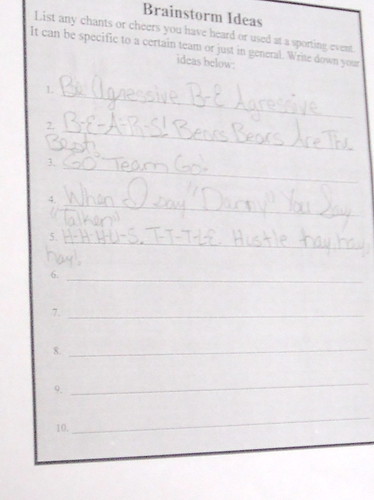
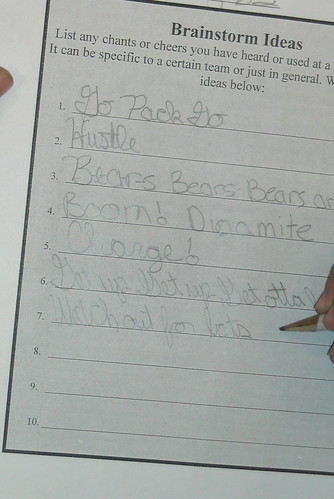
I broke this project into just two 30 minute music classes (which in my opinion is a rather quick composition project compared to some others I have done). The first day is a brainstorming day. I pair the students into groups of about 3 or 4 students. These groups then brainstorm and come up with at least 10 chants they have heard or would cheer at a sporting event. (Note: I said sporting event to reach some of my students who do not like football, but may enjoy other sports)
Ostinato Cheer Composition

The second day was devoted to writing the rhythms that go with the chants. We talked first as a class about how to figure out the rhythms. We talk about where the beat lands and how sometimes we stress different parts of a word or phrase. I give them a couple examples of my own (I chose non-sports related things so they weren't just using my examples). The groups then worked on their chants. I had the 3rd graders have 3 final cheers, 4th graders 4 cheers, and 5th graders 5 cheers. I was really impressed with some of the cheers that they created and how well they put the rhythms together. The ones that had a little bit more difficulty, or just added quarters for all of their chants, were easy to help. I just read through their chants as written and they told me if it was right or not. If it wasn't we figured out how to fix the problem together.

I found that just like with many other group activities you have those groups that get done in 10 minutes and then the other groups that work the entire 20 minutes. For this situation you should probably have some extra game or work for the groups that are done quickly. This stops students from wandering around the room or just chatting about nothing in particular.

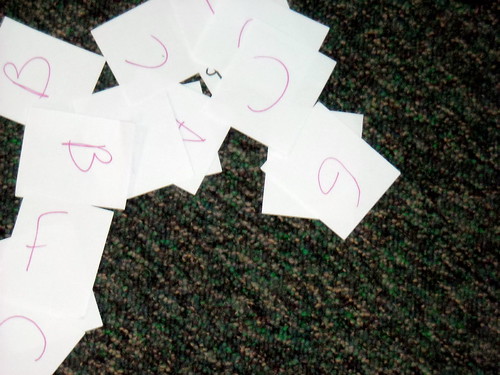
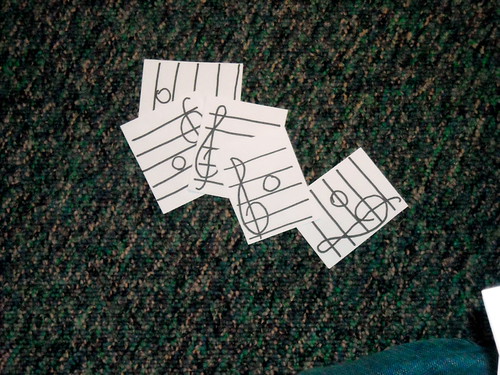
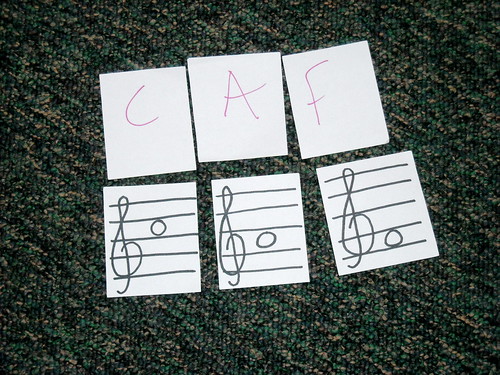
For my quick finishing groups, I created a simple game to work on for the remainder of time. Each group got a baggy with 3 sets of music letters and 3 sets of treble clef staff notes to match. One teammate would create a word using the music letters (i.e. DAD) and then the other group members would work to match up the treble clef staff notes. This way they were working on treble clef note reading without getting bored and distracting their teammates.
Note Reading
Treble Clef Notes
Writing and reading music

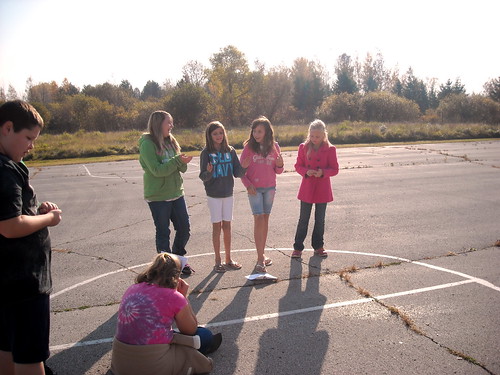
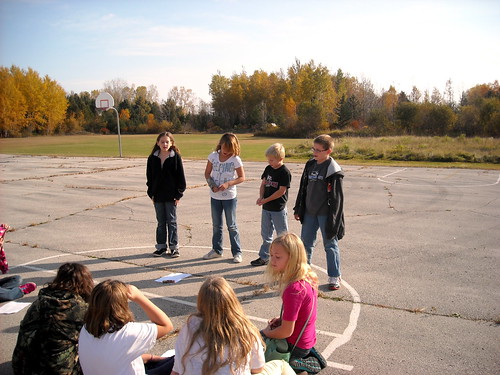
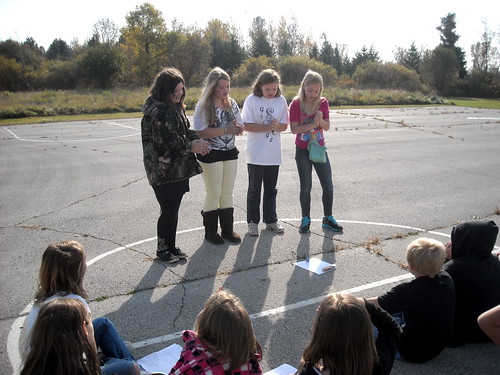
After the compositions were finished I brought students outside to share their chants with the class. I chose to go outside, not because it is particularly a loud process (though it can be) but because the snow will soon be coming here in Wisconsin and my students love being outside. That and I am really working to reach all of the multiple intelligence's in my classroom this year and one that I am particularly weak on is the nature intelligence. You will probably see more nature based lessons in the coming week as I prepare to bring my little ones outside to explore the music of the fall!
Ostinato Performance
Ostinato Chant Performance

If you are interested in this project you can get the document I created --->HERE<---

You can also use --->my rubric<--- that I created for grading the compositions.

Happy composing!

Thursday, September 27, 2012

Rhythmic Repitition

I decided after our review the first couple weeks that ALL of my classes (mostly 3-5 graders) needed to brush up on their rhythms. I wasn't sure how I was going to do this at first because it really seemed like we needed to go back to basics on this. I noticed the most difficult part for students was remembering, which note is which and how many beats it gets.

Solution? New rhythm game using quarter notes, quarter rests, and eighth notes. Once students get good at the game I'll add in other harder rhythms and hopefully get us back onto track. I call this new rhythm game Rhythmic Concentration. It was based off of a music concentration that many of you probably have heard about.

Here is how it works:

Rhythm Concentration
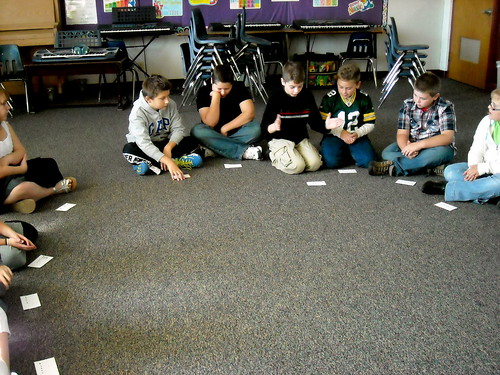
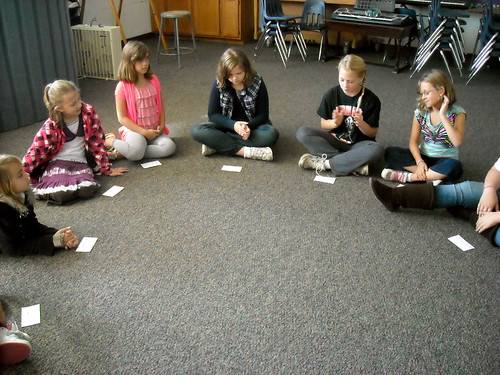
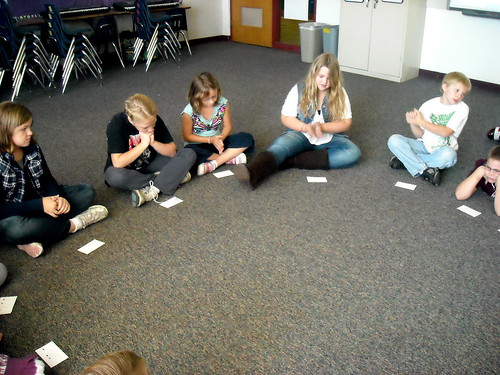
Everyone in the class sits in a circle on the floor.

Rhythm Concentration
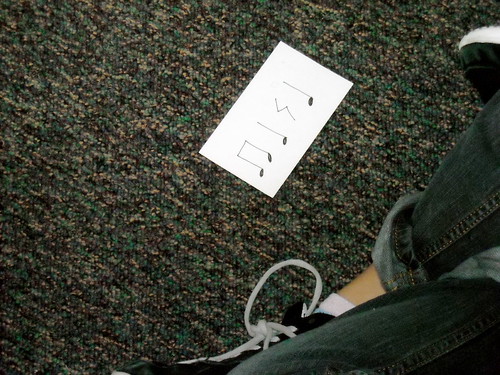
Each student is given a basic rhythm that was written on an index card. (I used only quarter notes, quarter rests, and eighth notes, however you could add in other rhythms your students know)

I then put a piece of tape or something to mark the 'beginning/end' of the circle. The person on the right of the marker is #1. The goal of the game is to be #1 at the end of the game.

The #1 person claps their rhythm and then #2 claps their rhythm immediately after. This continues all the way around the circle. During the first round, I normally just let them practice their rhythm. However, after that it gets harder.

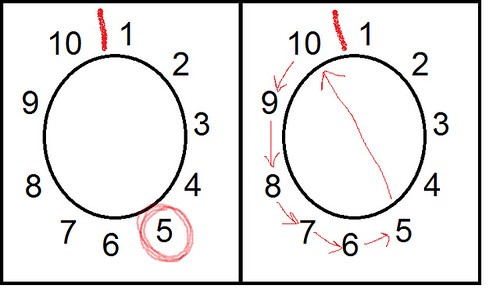
Students continue clapping their rhythms as they continue around the circle. When someone misses their turn or hesitates that student has to go to the end (to the left of the marker). Their rhythm stays where it is and then students fill in the spaces. For example: if #5 of #10 misses their turn #10 shifts to #9; #9 shifts to #8; #8 shifts to #7; #7 shifts to #6; #6 shifts to #5; and #5 shifts to #10!

For those visual learners like myself, a model of the switch!:
rhythm concentration switch

After that it gets even more difficult. I start sending people to the end of the circle for clapping the wrong rhythm, not doing it in beat, and I have even added the metronome for some of my older students and they have to stay in beat.

Rhythm Concentration

My students really seem to like it. What I like most about it is it is fast paced, so those that get frustrated with waiting for everyone to get a turn don't feel that way during this game. I also like it because they are practicing their rhythms without feeling like they are practicing rhythms!

Rhythm Concentration

If you try this out, please let me know how it goes or any changes you made to make the game run smoother! Also feel free to ask me questions about it, I'll do my best to answer them. Have fun!